Teeth whitening is not magic. It can brighten many stains, make a smile look cleaner and younger, and still disappoint people who were sold a fantasy instead of the truth.
That disappointment is common. Someone buys strips, an LED kit, charcoal paste, or a social media promise and expects paper-white teeth by the weekend. Then the real questions show up. Why do the teeth sting? Why do the edges still look gray? Why did one tooth stay darker than the rest? Those are fair questions, and they deserve straight answers.
The unfair part is how often whitening gets marketed like a beauty shortcut instead of what it really is: a cosmetic treatment with limits, tradeoffs, and a real need for proper diagnosis first. A dentist should not treat every stain like the same problem, because not every discoloration responds the same way.
If the goal is to understand what to expect from teeth whitening, the short version is this: most people can expect visible brightening, some temporary sensitivity, and results that vary based on the cause of the stain, the condition of the enamel, and the method used.
At Simply Veneers, patients in Newport Beach, CA can explore professional teeth whitening options with guidance tailored to their smile goals and oral health needs. A professional evaluation can help determine the cause of discoloration, identify potential sensitivity concerns, and create a more predictable whitening experience without relying on one-size-fits-all products.
Whitening products usually rely on peroxide-based ingredients that break down stain molecules within the tooth structure. Enamel is the hard outer shell of the tooth, and dentin is the deeper layer underneath that naturally has a more yellow tone. Whitening does not repaint teeth. It changes how visible certain stains are.
That distinction matters. Yellowing from age, coffee, tea, red wine, tobacco, and normal stain buildup often responds reasonably well. Gray discoloration, discoloration from trauma, some medication-related staining, and color changes linked to internal tooth damage may respond less predictably.
Whitening also does not change the color of crowns, veneers, fillings, or bonding. If the front teeth have older dental work, the natural teeth may lighten while restorations stay the same shade. That mismatch is one of the most common reasons people feel caught off guard after treatment.
People with surface staining and age-related yellowing often see the most noticeable improvement. Teeth that are generally healthy, free of untreated decay, and not heavily restored also tend to whiten more evenly.
That said, there is no universal result. Some smiles brighten a little. Some brighten a lot. Some show a clear improvement in a few days, while others need a longer course or a different approach. The starting shade matters, but so does the reason the teeth became darker in the first place.
A good dentist will be honest here. If the stain pattern suggests a limited response, that should be said upfront instead of after money has already been spent.
In-office whitening is usually the fastest route to visible change. A dental team protects the gums, applies a stronger whitening gel, and monitors the process closely. Many patients like it because the treatment is supervised and the shade change may be noticeable the same day.
The tradeoff is that sensitivity can be sharper during the first day or two. Some people describe brief zingers, meaning sudden electric-like pains in the teeth. They are usually temporary, but they can be intense enough to make someone regret pushing for a brighter shade too aggressively.
Custom trays are often the most balanced option. They create a slower, more controlled whitening process and may allow better adjustment if sensitivity starts to build. Because the trays are made to fit the teeth, the gel usually sits more precisely and irritates the gums less than one-size-fits-all products.
This method takes patience. Results often build over days to weeks rather than in a single appointment. In many cases, that slower pace is a good thing because it gives the teeth time to respond without being pushed past comfort.
Over-the-counter products can work, especially for mild staining. They are accessible and less expensive, which is exactly why they are so popular.
But this is where the market gets sloppy. Fit is less precise, gum irritation is more common, and the concentration and contact pattern may not be ideal for every smile. If the teeth are crowded, uneven, restored, or already sensitive, the result can be patchy or uncomfortable.
The most common side effect is temporary tooth sensitivity. Whitening can make teeth more reactive to cold air, cold drinks, sweets, or even brushing. That happens because peroxide can move through the enamel and dentin and temporarily irritate the pulp, the inner part of the tooth that contains the nerve and blood supply. This basic whitening process is also why some people feel those sharp little zingers afterward.
Mild gum irritation can also happen, especially if gel sits on the soft tissue for too long. This may feel like a chemical burn or a tender white patch on the gums. It usually settles, but it is still a sign that the process was too harsh or poorly controlled.
Sensitivity is common, but severe pain is not something to shrug off. If a tooth has lingering pain, spontaneous throbbing, swelling, or pain when biting, the issue may not be simple whitening sensitivity. It may point to decay, a cracked tooth, gum disease, or a nerve problem that needs a dental exam.
Whitening does not freeze teeth in place forever. The color can gradually relapse, especially with regular exposure to coffee, tea, tobacco, red wine, deeply pigmented foods, and poor plaque control.
For many people, the brighter shade lasts months rather than years without maintenance. Oral hygiene, diet, enamel quality, and the original cause of staining all affect how long the result holds.
This is where expectations need to stay grounded. Whitening is maintenance-heavy by nature. Anyone selling it as a one-time fix is skipping the reality.
Whitening should wait if there is untreated decay, significant gum inflammation, exposed roots, a broken filling, a cracked tooth, or unexplained darkening of one tooth. Those problems can make whitening painful, less effective, or simply inappropriate.
One dark tooth deserves particular caution. It may be harmless staining, but it may also reflect prior trauma, internal bleeding inside the tooth, pulp damage, or an old root canal issue. Whitening that tooth without understanding the cause is not smart care.
Children, teenagers with developing teeth, and pregnant patients should discuss safety with a dentist before using whitening products. General education online is not a substitute for an exam.
Seek prompt dental evaluation if there is swelling, fever, severe tooth pain, facial tenderness, or a bad taste with drainage. Those findings may suggest infection rather than simple stain or sensitivity.
Also get checked soon if a tooth turns suddenly gray, brown, or pink after an injury, or if whitening pain lingers instead of fading. Cosmetic treatment should never outrun diagnosis.
Whitening cannot repair worn enamel, close gaps, straighten teeth, remove white spot lesions, or make restorations match newly brightened teeth. It also cannot reverse every kind of intrinsic discoloration, meaning color change that comes from within the tooth rather than sitting on the surface.
In some cases, a dentist may discuss alternatives such as bonding, veneers, replacement of visible fillings, or internal treatment for a previously injured tooth. That does not mean whitening failed. It means the problem was never just ordinary staining to begin with. (See bonding vs veneers.)
This is exactly why cosmetic dentistry should not be run like a vending machine. Read more about the art and science of cosmetic dentistry.
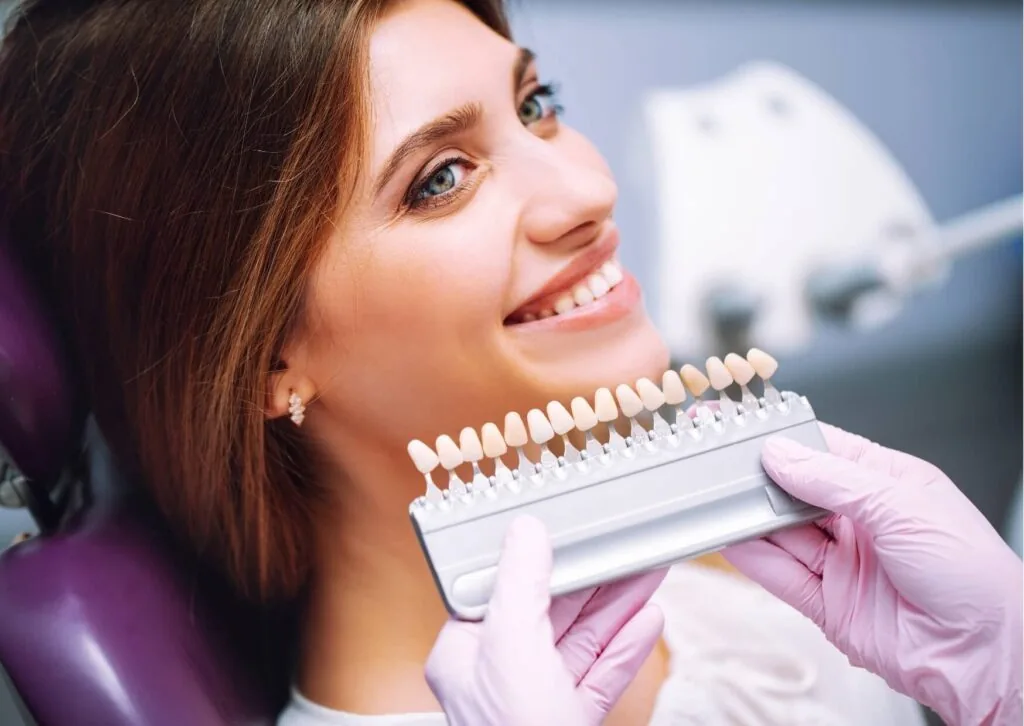
Most people should expect improvement, not perfection. Teeth often lighten by a few shades, but the final color may still look natural rather than ultra-white. In fact, a natural-looking result is usually the better outcome because it fits the face, age, and surrounding teeth.
The edges of teeth may stay slightly translucent or grayish because they are thinner there. Areas with old fillings or bonding may stand out more after whitening. Crowded teeth may whiten unevenly at first. None of that is unusual.
If a result looks too good in an ad, it probably is. Real enamel has variation, and healthy smiles are not supposed to look like painted tiles.
| Option | What Patients Often Notice | Main Upside | Main Limitation |
| In-office whitening | Faster visible brightening, more immediate sensitivity | Supervised treatment and quicker results | Higher cost and sensitivity may be stronger |
| Custom dentist-made trays | Gradual change, more control over comfort | Good balance of effectiveness and fit | Takes longer and requires consistency |
| Store-bought strips | Mild to moderate brightening in some cases | Lower cost and easy access | Less precise fit, more uneven results in some smiles |
| Whitening toothpaste | Surface stain reduction more than deep whitening | Simple daily use | Limited effect on deeper discoloration |
The best option depends on the teeth, not the trend. A careful exam often saves people from wasting time on products that were never likely to work well for their specific stain pattern.
The cleanest answer to what to expect from teeth whitening is this: expect some brightening, expect limits, and expect the process to work better when a dentist first rules out disease and identifies the kind of discoloration involved.
Patients deserve better than cosmetic marketing that treats every smile like a blank white wall. Teeth are living structures. Some are stained. Some are damaged. Some are restored. Some are trying to signal a problem. Whitening can be a useful cosmetic tool, but it should never be used as a shortcut around diagnosis.
If the teeth are healthy and the stain type is favorable, whitening can be worth it. If the mouth hurts, one tooth looks suspiciously dark, or sensitivity is already a problem, the smart move is not buying a stronger kit. It is getting the right exam and refusing to be sold nonsense.
If you are ready to improve your smile with professional whitening, our team at Simply Veneers can help you choose an approach that fits your goals, comfort level, and oral health needs. Call us at (949) 777-1000 to schedule your teeth whitening consultation in Newport Beach, CA. Patients from nearby communities trust our practice for cosmetic dentistry focused on natural-looking, confident results.
In-office treatment may show a change the same day. Take-home trays and strips usually work more gradually over days to weeks.
It may cause temporary sensitivity or mild gum irritation, but severe or lingering pain is not typical and should be evaluated.
A single darker tooth may have a different cause, such as prior trauma, internal damage, or an old restoration. That situation deserves a dental exam before more whitening.
No. Whitening does not change the color of crowns, veneers, fillings, or bonding.
Results often fade over time. How long they last depends on diet, tobacco exposure, oral hygiene, enamel characteristics, and the whitening method used.




